The Ideal Guide to Emergency Lighting
Updated: Mar 30
It is imperative to provide sufficient illumination within a building as it ensures the safety of those working within it. It enables the occupants to evacuate in case of an emergency or otherwise terminate any potential hazards prior to evacuation.
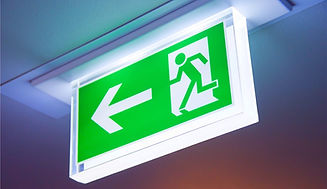
The loss of normal illumination could happen as a result of a fire or a power cut, potentially leading to sudden darkness that needs to be prevented by emergency lighting that can be split into five distinctions:
Emergency Escape Lighting –
Emergency Escape Lighting is essential for ensuring safety during emergencies, providing illumination for safe evacuation. It helps reduce panic and allows for the shutdown of dangerous processes. This lighting is mandated by The Regulatory Reform (Fire Safety) Order 2005 for all commercial and public buildings to minimize risks during emergencies.
Standby Lighting –
Standby Lighting is an auxiliary system that allows normal activities to continue during power outages, though not legally required. It is particularly valuable in critical environments like hospitals and data centres, ensuring operations remain uninterrupted.
Escape Route Lighting –
Escape Route Lighting is crucial for identifying exit paths during emergencies, enhancing safe evacuation and reducing panic. It provides clear visibility of exits, ensuring orderly movement towards safety, especially in complex building layouts.
Open Area or Anti-Panic Lighting –
Open Area or Anti-Panic Lighting prevents panic by illuminating open spaces during emergencies, helping occupants locate exits. Its strategic placement is vital in large environments to ensure clear paths to safety.
High Risk Task Area Lighting –
High Risk Task Area Lighting provides illumination in areas with dangerous processes, allowing safe shutdowns before evacuation. It is essential in industries like manufacturing for enhancing safety and reducing accident risks during emergencies.
There are a further two types of emergency lighting systems: maintained and non-maintained. Maintained systems are individual luminaries that each incorporate a battery that is charged from the mains lighting supply. For example, this could be when the mains power is fully restored following an interruption, the luminary’s emergency lighting battery is fully recharged from the mains power supply. Non-maintained system individual luminaries incorporate a power back up supply that is independent of the mains supply. Maintained luminaries are only required in areas where the lighting is dimmed, for example in cinemas and theatres.
On completion of the work of instillation of an emergency lighting system, a completion certificate should be supplied by the installer to the occupier or owner of the premises. The Building Control should insist upon a copy of this certificate which should be retained with the Buildings Regulations application.
What are the legal requirements for emergency lighting?
Current UK regulations require the provision of a horizontal illuminance at floor level on the centre line of a defined escape route not less than 0.2 lux. It is also important to consider the escape routes, which should be at least 2m wide with 50% of the route width being lit to a minimum of 0.1 lux. Adequate artificial lighting should be provided in all common escape routes and should be of a sufficient standard to enable persons to see to escape except parts of the building used by members of the public in a ground storey only restaurant, banqueting room, public house, bar or premises used for similar purpose, accommodating less than 100 persons and from which there are a sufficient number of final exits.
Where should emergency lighting be located?
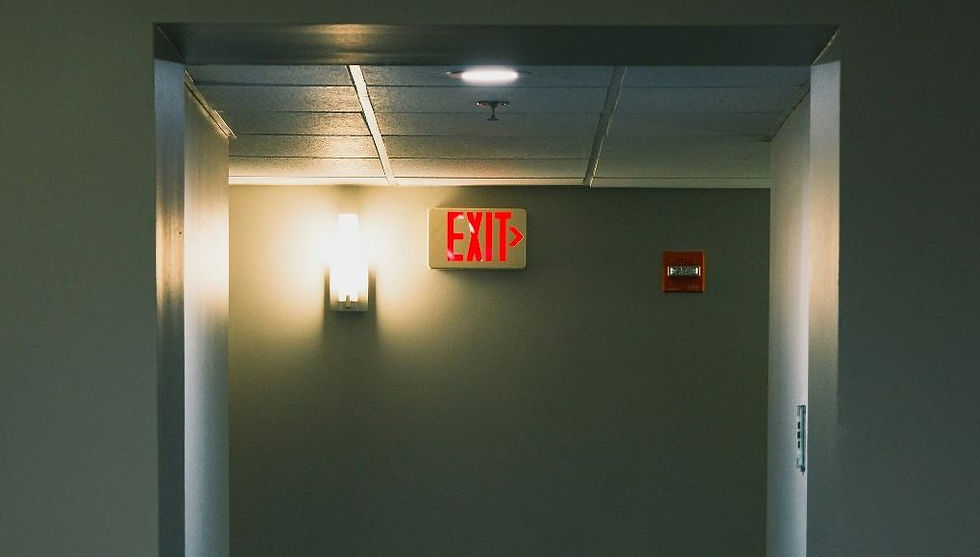
Emergency lighting should be installed in all common areas and escape routes. Regulations state that any open area that is larger than 60 square meters should also have emergency lighting installed. It is recognised that during an emergency there is a high level of panic so having that area well-lit is important in preventing any further accidents. Additional regulations state that emergency lights should be fitted within 2m in horizontal distance above a fire alarm or firefighting appliance. This optimises worker’s environments by providing emergency lighting, allowing them to do their job as best as possible. It is also important to consider that there could be different emergency lighting requirements for different buildings, resulting in each building needing an assessment and a set of emergency lights developed accordingly.
Enhancing the aesthetics of emergency lighting
While emergency lighting is critical to life safety and must function to code, ruining the aesthetics of a building’s interior is definitely something that can be avoided with careful planning. Industry professionals are increasingly keeping the lights hidden or camouflaged until needed to ensure it artfully blends in with its surroundings. Fixtures can now be completely hidden behind closed-door panels on walls or ceilings, while still meeting the emergency lighting code. Only in the event of an emergency or power outage do the doors open and the emergency lights emerge to ensure sufficient light along the path of egress. For even greater discretion, the panels can be painted, wallpapered over and placed in locations out of sight to make them completely inconspicuous.
Design professionals often meticulously plan the aesthetics of various building elements, including style, form and materials in a wide range of structures. This can involve upscale hotels, resorts, restaurants, retail centres, office buildings as well as historic buildings, museums, city halls and state and federal buildings. The challenge occurs when the timeline is rushed and unfortunate compromises are made, altering the building’s aesthetics.
Emergency Lighting with Veteran Fire Safety

Get in contact today to explore the various opportunities we offer and to discuss how we can assist you in achieving your goals. Whether you have questions, need further information, or are ready to take the next step, our team is eager to engage with you. We believe that open communication is essential for building strong relationships and ensuring that we fully understand your needs and expectations. Don't hesitate to reach out to us through any of our available channels, including phone, email, or our website contact form. Your inquiries are important to us, and we are committed to providing prompt and thorough responses.
Take the initiative today and connect with us; we look forward to hearing from you soon!


